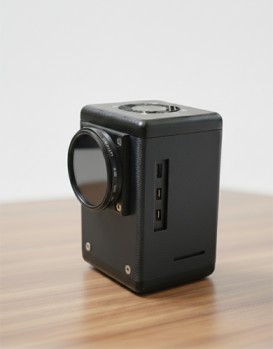
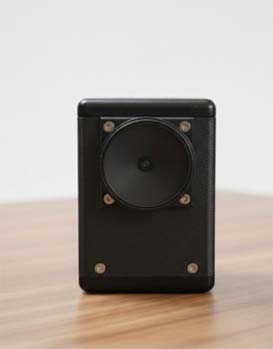
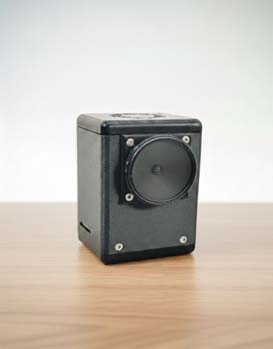
Our Machine Vision Camera
What Is Machine Vision?
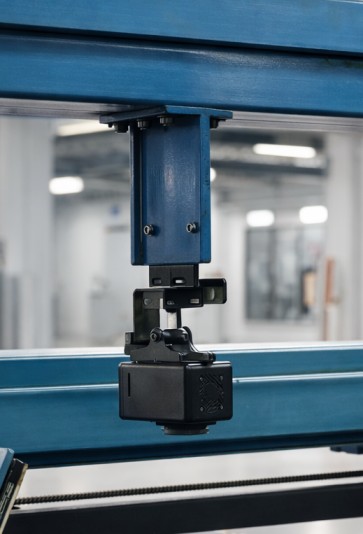
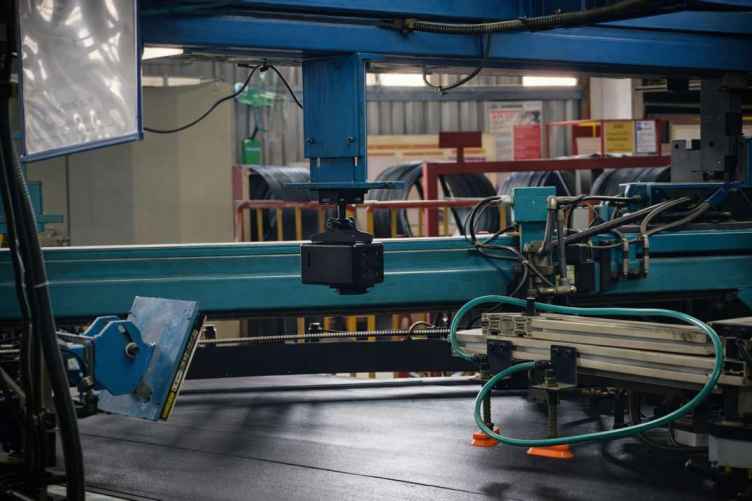
Machine vision enables machines to see, analyze, and make decisions using images captured by vision cameras. It is widely used in industrial automation to improve quality, accuracy, and production efficiency without human intervention.
By combining cameras, optics, and intelligent processing, machine vision systems deliver fast and consistent inspection results in demanding environments.
Our Machine Vision Capabilities
- Automated visual inspection
- Defect detection/Surface inspection
- Dimensional measurement and gauging
- Object detection and positioning
- OCR (optical character recognition)
Benefits of Machine Vision Cameras
- Faster and more efficient production
- Automated and streamlined workflows
- Consistent quality inspection
- Reduced waste and operational costs
- Stable, scalable industrial performance
Working Cycle
Our Working Cycle
01
Initial Consultation
We understand your production goals, inspection challenges, and quality requirements to define the right vision solution.
02
Prototype & Validation
We develop and test a working prototype under real production conditions to ensure accuracy, reliability, and performance.
03
System Deployment & Integration
The vision system is installed and seamlessly integrated with your PLCs, robots, and automation systems with minimal production disruption.
04
Ongoing Support & Optimization
We provide continuous technical support, performance monitoring, and system optimization to ensure long-term reliability and efficiency.
Industries We Serve
We provide machine vision solutions for industries that require high accuracy, consistency, and automation
Automotive & Tire Manufacturing
Inspection of tire raw materials, semi-finished components, and welded automotive parts used in vehicle production.
Automotive Component Manufacturing
Quality verification of welded parts and structural components before vehicle assembly.
General Manufacturing
Surface inspection, measurement, identification, and process monitoring across industrial production lines.
From Client Satisfaction to Success
Bridgestone India Pvt. Ltd.
Plot No. A43, Phase-II, MIDC Chakan, Village Sawardari, Khed taluka, Maharashtra 410501
"The machine vision system significantly improved our raw material inspection process. Surface defects and line marks that were previously difficult to detect manually are now identified instantly and consistently. This has reduced rework, minimized waste, and improved overall production efficiency."
BELMAKS METAL (INDIA) PVT. LTD.
Plot No. 6, Sector 2, Industrial Area, Pithampur, Dist. Dhar, Madhya Pradesh, 454775.
"The vision inspection system for our welded automotive parts has enhanced our quality control standards. The system detects weld defects and alignment issues with high precision, ensuring only approved components move to final assembly. Integration with our PLC system was seamless and highly reliable."
Sharp Auto PVT. LTD.
S Block, MIDC, Bhosari, Pune, Pimpri-Chinchwad, Maharashtra 411026
""Implementing the machine vision solution has significantly strengthened our inspection process for welded components. The system accurately identifies weld imperfections and alignment variations, allowing us to maintain consistent quality before final assembly. Integration with our existing setup was smooth, and the system has been performing reliably on the production line."
Machine vision provides faster, more consistent, and more accurate inspection compared to human inspection, eliminating fatigue-related errors.
Yes. Our systems integrate seamlessly with PLCs, robotic systems, and industrial automation platforms.
Lighting plays a critical role in image quality. Proper lighting ensures accurate defect detection, measurement, and code reading.
Yes. Systems can log inspection results, store images, and generate reports for traceability and quality control analysis.
Yes. Industrial vision systems are designed for continuous operation in high-demand production environments.
The system sends a signal to reject the defective product, stop the line, or trigger corrective action automatically.
Yes. By detecting defects early in production, machine vision significantly reduces the risk of defective products reaching customers.